
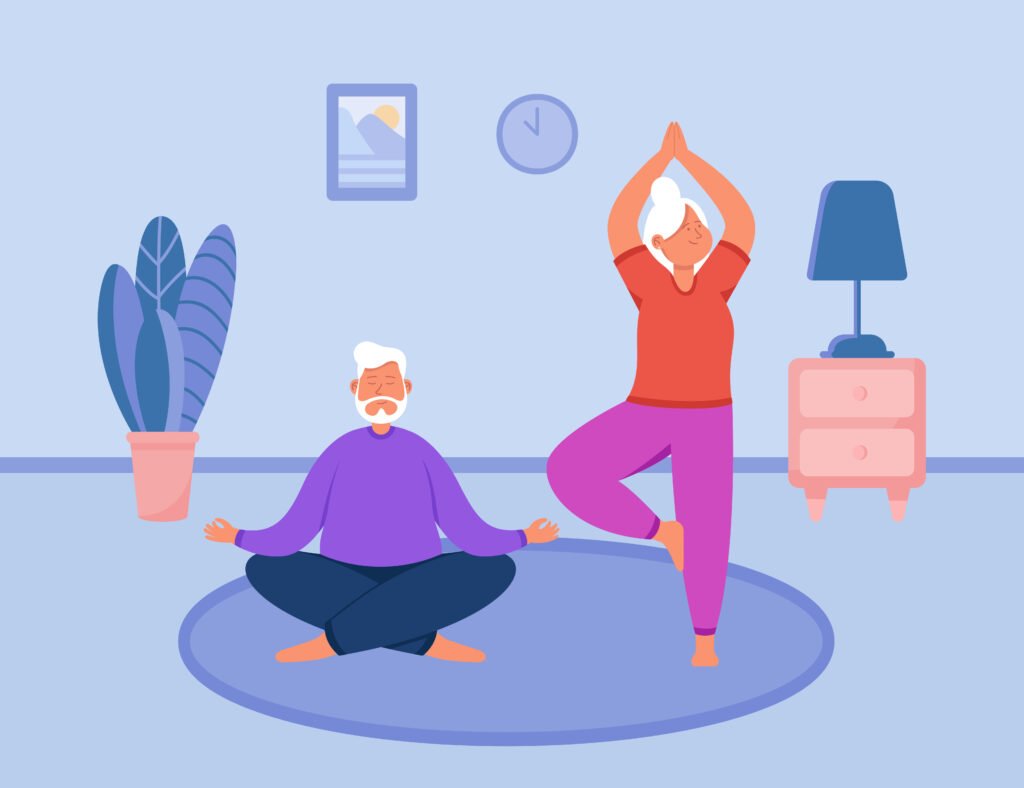
Tai Chi is emerging as a powerful tool in integrative medicine, combining gentle movement, deep breathing, and mindfulness to address a remarkable range of health conditions. This ancient Chinese practice, once reserved for martial artists, is now being prescribed by physicians worldwide as a safe, accessible form of mind-body medicine that complements conventional treatments.
A Brief History of Tai Chi
Tai Chi Chuan originated as a Chinese martial art and has evolved over centuries into a widely practiced form of exercise and health promotion.[1] The practice integrates ancient wisdom with systematic movement patterns, traditionally passed down through various family styles. Yang style Tai Chi is the most popular and widely studied form, particularly in clinical settings.[2]
What began as a martial discipline has transformed into a conditioning exercise well known for its slow and graceful movements.[1] Over the past 45 years, this ancient practice has been subjected to rigorous scientific scrutiny, with more than 500 clinical trials and 120 systematic reviews documenting its health benefits.[3]
What Makes Tai Chi Special?
Tai Chi integrates deep diaphragmatic breathing with slow, flowing movements to achieve harmony between body and mind while facilitating the flow of internal energy, or “Qi”.[4] Unlike high-impact exercise, Tai Chi is a mild-to-moderate intensity aerobic activity that’s appropriate for nearly everyone—from healthy adults seeking wellness to patients managing chronic diseases.[4]
The beauty of Tai Chi lies in its flexibility. Participants can perform a complete set of movements or select specific exercises according to their needs and abilities.[4][1]
The Evidence: What Can Tai Chi Do?
The scientific literature on Tai Chi is substantial. The evidence is particularly strong for:
Excellent evidence exists for:[3]
– Preventing falls in older adults
– Managing Parkinson’s disease symptoms
– Improving cognitive function in seniors
– Rehabilitating chronic obstructive pulmonary disease (COPD)
– Treating osteoarthritis
Good to moderate evidence supports benefits for:[3][5]
– Depression and psychological well-being
– Cardiac [and stroke](/rare-disease/retinal-vasculopathy-with-cerebral-leukoencephalopathy-and-systemic-manifestations) rehabilitation
– Hypertension (lowering blood pressure)
– Balance and mobility
– Quality of life in cancer patients
– Chronic low back pain
– Osteoporosis
A comprehensive review of 210 systematic reviews found that 66 out of 114 effect estimates showed clinically important benefits, with improvements spanning physical function, mental health, pain reduction, balance, strength, and quality of life.[5]
How Tai Chi Works in the Body
Tai Chi produces measurable physiological changes. Regular practice improves aerobic capacity, muscular strength (particularly in the lower limbs), balance, and health-related quality of life.[4] Research suggests these benefits occur through modulation of the autonomic nervous system, which regulates involuntary body functions.[6]
Studies have documented improvements in multiple body systems, including reductions in blood pressure, body mass index, and markers of inflammation, along with enhanced exercise capacity, gait, and range of motion.[7]
Getting Started: Movement Descriptions and Techniques
Basic Foundational Movements
The Opening Stance
– Stand with feet shoulder-width apart, knees slightly bent
– Arms hang naturally at your sides
– Breathe deeply into your abdomen, allowing your belly to expand on inhale
– Focus on feeling grounded and centered
Cloud Hands (Yun Shou)
– From the opening stance, shift your weight to one leg
– Raise one hand in a gentle arc across your body at chest height, palm facing you
– As one hand moves across, the other hand follows in a circular, flowing motion
– Shift your weight from side to side as your hands “paint clouds” in the air
– Coordinate breathing with the movement—inhale as you shift, exhale as you settle
Parting the Wild Horse’s Mane
– Step forward with one foot while extending the opposite arm forward, palm up
– The other arm extends backward, palm down
– Imagine gently parting tall grass as you move
– Alternate sides, maintaining slow, controlled movements
Clinical Tai Chi Programs: Enhanced Movement Components
Yang-Style Warm-Up Sequence
Clinical programs typically begin with a warm-up that includes weight shifting, arm swinging, and gentle stretches of the neck, shoulders, spine, arms, and legs, combined with visualization techniques and traditional breathing methods.[8] These exercises focus on releasing bodily tension, incorporating mindfulness and imagery into movement, increasing awareness of breathing, and promoting overall relaxation.
Modified 10-Form Yang-Style Routine
Clinical trials commonly use a modified 10-form Yang-style tai chi routine tailored for people with limited mobility or chronic conditions.[8] Each form is performed repetitively with synchronized breathing. The practice progresses from simple movements in week one to increasingly complex movements over 12 weeks.
Therapeutic Movement Components
Evidence-based therapeutic tai chi programs incorporate specific elements proven effective in clinical trials:[8]
– Center of gravity displacement: Dynamic interplay of stabilizing and self-induced destabilizing postural actions
– Unilateral weight-bearing and weight-shifting movements: Transferring weight from one leg to the other while maintaining balance
– Trunk and pelvic rotation: Gentle twisting movements of the torso
– Ankle sway exercises: Controlled rocking movements to strengthen ankle stability
– Eye-head-hand coordination: Synchronized movements that integrate visual tracking with physical motion
Mini-Therapeutic Movements
These functional exercises are interspersed with the traditional forms:[8]
– Sit-to-stand transitions (4-5 repetitions per set)
– Single-leg stands for balance
– Turning exercises
– Stepping exercises in various directions
Practice Format and Progression
Clinical programs typically structure sessions as follows:[8]
– Weeks 1-10: Learning forms in seated, standing, and stepping formats
– Each session: 3-4 sets of tai chi forms (3-5 repetitions each) alternating with 3-5 sets of mini-therapeutic movements
– Weeks 11-12: 5-6 sets of variations on the complete 8-form routine
Tai Chi in Clinical Practice
Yang style Tai Chi is the most commonly studied and practiced form.[2] In clinical settings, programs typically involve two to three one-hour sessions per week for 12 weeks.[2] Remarkably, a 12-week Tai Chi program produced improvements in pain and function similar to standard physical therapy for knee osteoarthritis.[9]
Tai Chi can be used alone or combined with conventional treatments including medications, health education, and other physical therapies.[2] The Department of Veterans Affairs guidelines recognize Tai Chi as an effective non-pharmacological intervention for osteoarthritis management.[9]
Useful Tips for Practitioners
For Beginners:
– Start slowly: The exercise intensity of Tai Chi depends on training style, posture, and duration. Choose movements that match your current fitness level.[1]
– Focus on form over speed: Slow, controlled movements are more beneficial than rushing through the sequence.
– Breathe naturally: Don’t force the breath; let it flow naturally with the movements.
– Practice regularly: Aim for at least 20 minutes daily for home practice.[8]
Key Principles to Remember:
– Move slowly and deliberately
– Keep movements continuous and flowing
– Maintain a relaxed but upright posture
– Coordinate breathing with movement
– Practice mindfulness and body awareness
Progression Strategy:
– Begin with simple movements and gradually add complexity
– Consider starting with a modified routine if you have mobility limitations
– Participants can choose to perform a complete set or selected movements according to their needs[4][1]
Safety Considerations:
– Tai Chi has an exceptional safety record with no intervention-related serious adverse events reported[3]
– Adverse events are typically minor and primarily musculoskeletal[3]
– The practice is appropriate for middle-aged and elderly individuals and can attenuate age-related decline in physical function[1]
The Bottom Line
Tai Chi represents a bridge between ancient wisdom and modern evidence-based medicine. Its multidimensional effects—improving physical function, mental health, and quality of life across diverse conditions—make it an invaluable tool in integrative healthcare.[5] Whether you’re managing a chronic condition, preventing falls, or simply seeking to enhance overall wellness, Tai Chi offers a gentle, enjoyable path to better health that can be practiced throughout life.
The practice requires no expensive equipment, can be adapted to individual abilities, and is suitable for implementation in diverse community settings.[7] As the evidence continues to grow, Tai Chi is increasingly recognized not just as
References
- Tai Chi Chuan: An Ancient Wisdom on Exercise and Health Promotion. Lan C, Lai JS, Chen SY. Sports Medicine (Auckland, N.Z.). 2002;32(4):217-24. doi:10.2165/00007256-200232040-00001.
- Evidence Base of Clinical Studies on Tai Chi: A Bibliometric Analysis. Yang GY, Wang LQ, Ren J, et al. PloS One. 2015;10(3):e0120655. doi:10.1371/journal.pone.0120655.
- Health Benefits of Tai Chi: What Is the Evidence?. Huston P, McFarlane B. Canadian Family Physician Medecin De Famille Canadien. 2016;62(11):881-890.
- Tai Chi Chuan in Medicine and Health Promotion. Lan C, Chen SY, Lai JS, Wong AM. Evidence-Based Complementary and Alternative Medicine : eCAM. 2013;2013:502131. doi:10.1155/2013/502131.
- Determining the Safety and Effectiveness of Tai Chi: A Critical Overview of 210 Systematic Reviews of Controlled Clinical Trials. Yang GY, Hunter J, Bu FL, et al. Systematic Reviews. 2022;11(1):260. doi:10.1186/s13643-022-02100-5.
- Perceived Health Benefits of Taijiquan and Qigong. Rodrigues JM, Lopes LT, Gonçalves M, Machado JP. Alternative Therapies in Health and Medicine. 2023;29(7):222-231.
- Effectiveness of Tai Chi for Health Promotion for Adults With Health Conditions: A Scoping Review of Meta-Analyses. Easwaran K, Gopalasingam Y, Green DD, et al. Disability and Rehabilitation. 2021;43(21):2978-2989. doi:10.1080/09638288.2020.1725916.
- The Science of Tai Chi and Qigong as Whole Person Health-Part I: Rationale and State of the Science. Wayne PM, Ahn A, Clark J, et al. Journal of Integrative and Complementary Medicine. 2025;31(6):499-520. doi:10.1089/jicm.2024.0957.
- The Non-Surgical Management of Hip & Knee Osteoarthritis (OA) (2020). Matthew Bair MD MS, John Cody MD, Jess Edison MD, et al. Department of Veterans Affairs.
Subscribe to get integrative wellness insights delivered to your inbox